
Thailand proudly celebrates the success of two Thai youth teams whose scientific ideas, “Harmonics” and “Liquid Bridges” were selected for real microgravity experimentation under the Asian Try Zero‑G 2025 Project, organized by the Japan Aerospace Exploration Agency (JAXA).
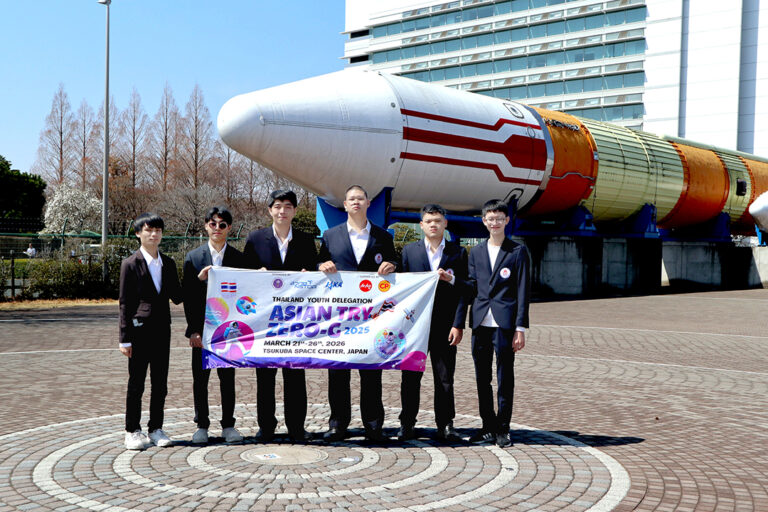
Their experiments, performed live aboard the International Space Station (ISS) by NASA astronauts, placed Thailand on the regional stage alongside winning teams from eight other Asia‑Pacific economies.
This achievement was made possible through the strong support of Thailand’s science and education partners. The Ministry of Higher Education, Science, Research and Innovation (MHESI), through the National Science and Technology Development Agency (NSTDA), worked in collaboration with JAXA, Charoen Pokphand Foods PCL (CPF), and Thai AirAsia X to send six Thai student representatives to Japan to participate in the Asian Try Zero‑G 2025 program. Their selection reflects Thailand’s growing capability in fostering high‑potential young talent in space science.
During their visit, the six students observed the live execution of their experiments from the Mission Control Room at the Tsukuba Space Center on 24 March 2026. They also had the rare opportunity to discuss their concepts directly with NASA astronaut Dr. Christopher L. Williams, gaining firsthand insight into space‑science operations and seeing their scientific hypotheses tested in real microgravity conditions. Beyond witnessing their own experiments, the students learned from the concepts and outcomes of their peers across the region, strengthening their scientific curiosity and global perspective.
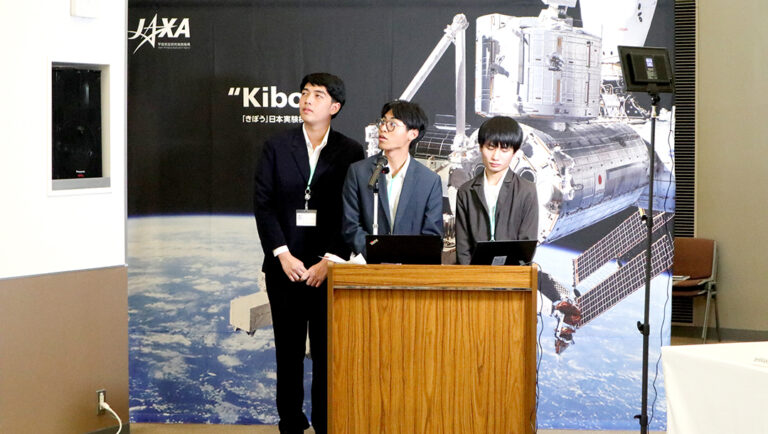
In addition to the core program, the Thai participants visited JAXA’s Space Dome, which showcases Japan’s major space missions and technological achievements. They also toured ispace, inc., a leading space‑technology company, where they met Thai professionals contributing to global missions. These experiences broadened the students’ understanding of the space sector and inspired their future aspirations in space‑related careers.
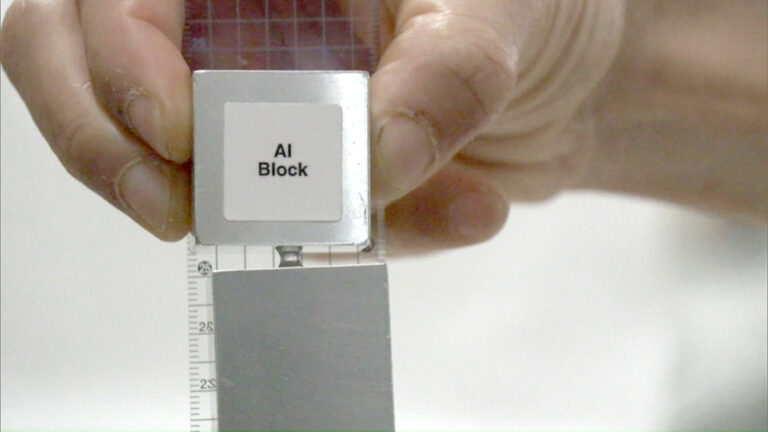
The Asian Try Zero‑G initiative remains a unique platform for youth across the Asia‑Pacific to propose experiments grounded in scientific rationale for testing aboard the ISS. This year marks the 11th consecutive year that NSTDA has supported Thai youth participation in the program, reaffirming Thailand’s commitment to nurturing the next generation of innovators and strengthening national capability in space technology.