National Science and Technology Development Agency (NSTDA), under the Ministry of Higher Education, Science, Research and Innovation (MHESI), signed a Memorandum of Understanding (MoU) with Thailand’s Department of Disease Control (DDC) under the Ministry of Public Health to integrate advanced science, technology, and innovation into public health operations aiming to build one of the region’s most accurate and modern disease surveillance systems.
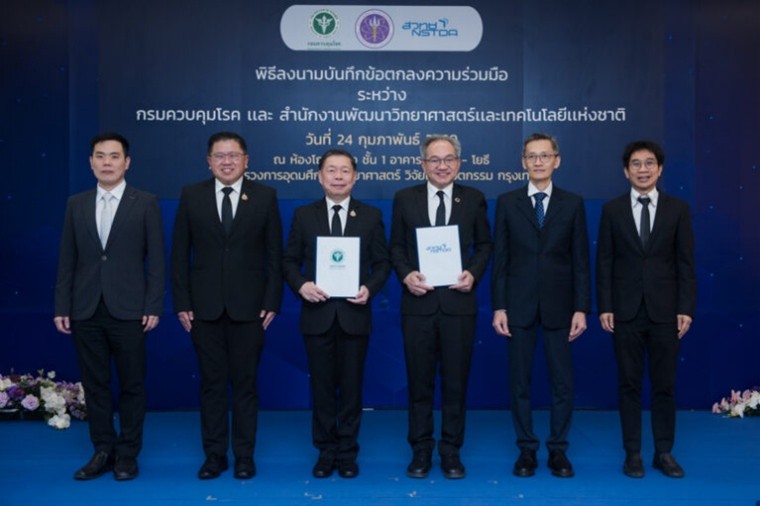
The collaboration is positioned as a cross ministry model to strengthen national health security against emerging and re-emerging diseases and complex health risks linked to climate change. The MoU focuses on accelerating the use of AI enabled solutions, rapid and accurate diagnostic tools, and data-driven surveillance to support proactive prevention and response.
Speaking at the ceremony, Dr. Montien Kanasawad, Director General of the DDC, highlighted the department’s shift toward becoming an “innovation organization,” leveraging digital technology and evidence-based approaches to move from reactive operations to more proactive prevention and control.
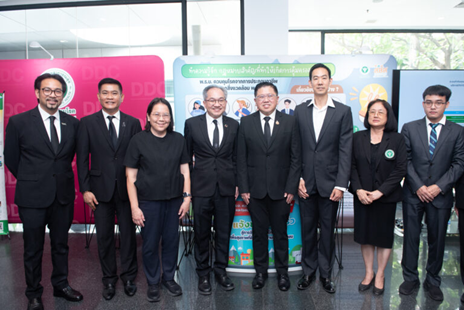
As part of NSTDA’s contribution, the agencies showcased practical technology pathways that have already been co-developed with DDC, including platforms for outbreak operations support, public health alerts, secure identity and access management (zero-trust), real-time data platforms for big data and IoT, and digital vaccination certificate systems. Looking ahead, NSTDA also proposed piloting Traffy Fondue as a digital channel for citizen reporting and urban health monitoring, alongside further development of fast and accurate test kits—advancing the transition toward “Smart Community Health.”
The MoU also emphasizes strengthening cross-functional skills among personnel across both ministries and building a sustainable innovation ecosystem for disease control supporting Thailand’s long term readiness while reducing socio-economic losses from future outbreaks.