
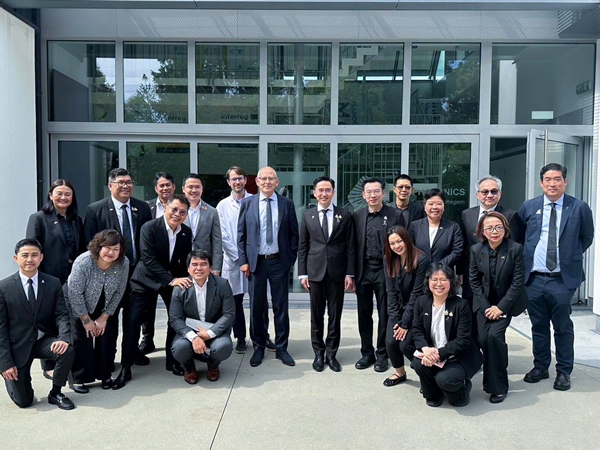
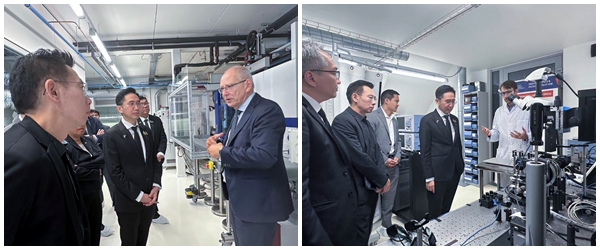
The National Science and Technology Development Agency (NSTDA) has taken a significant step toward strengthening Thailand’s capabilities in photonics through a new international engagement with Vrije Universiteit Brussel (VUB), Belgium. On 19 June 2026, NSTDA joined a visit to the Photonics Innovation Center at VUB, one of Europe’s leading hubs for photonics technology development, as part of a Thai delegation led by Professor Dr. Yodchanan Wongsawat, Deputy Prime Minister and Minister of Higher Education, Science, Research and Innovation (MHESI), to explore future collaboration in research, innovation, and human resource development.
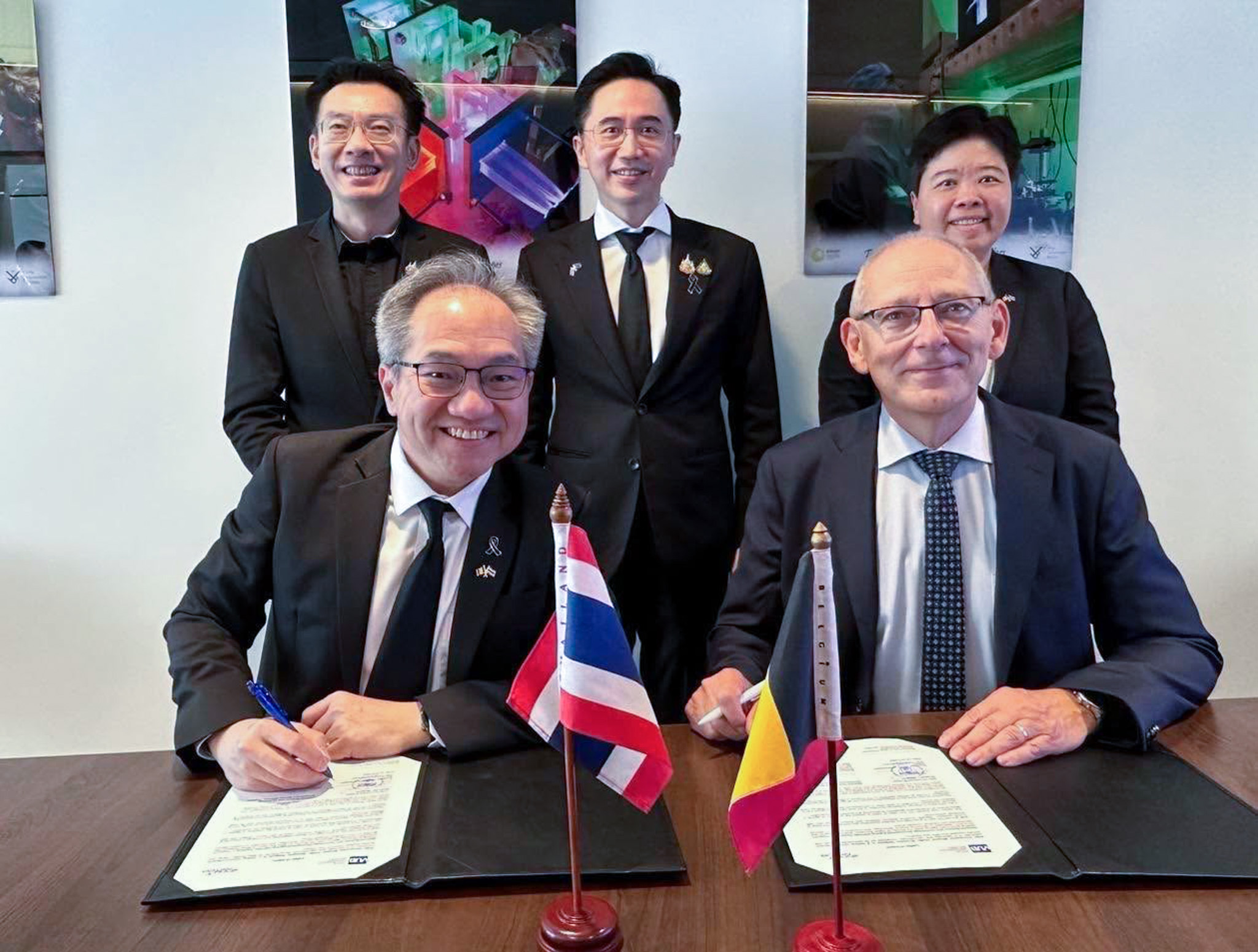
During the visit, NSTDA and VUB formalized their shared intention to pursue future cooperation through the signing of a Letter of Intent (LOI). Witnessed by Prof. Dr. Yodchanan Wongsawat, the LOI was signed by Prof. Dr. Sukit Limpijumnong, President of NSTDA, and Prof. Dr. Jan Danckaert, Rector of VUB, with Prof. Dr. Ir. Hugo Thienpont, Research Director of Brussels Photonics (B-PHOT), also present. The agreement establishes a framework for future collaboration in photonics research, including potential joint activities and the exchange of students and personnel between the two institutions.
The engagement reflects NSTDA’s commitment to strengthening partnerships with leading international institutions in areas of high technological significance and future industrial relevance. It also provides an opportunity to learn from VUB’s experience in linking research, education, and industry to support the development and practical utilization of advanced technologies.
Photonics is the science and technology of generating, controlling, transmitting, and detecting light. It is widely recognized as a key enabling technology for a broad range of modern applications, including high-speed communications, advanced sensing systems, medical technologies, and next-generation semiconductor and computing platforms.
By using light to transmit and process information, photonics offers significant advantages in speed, bandwidth, precision, and energy efficiency. These characteristics make it increasingly important for emerging industries such as optical communications, smart sensors, advanced manufacturing, healthcare diagnostics, and integrated photonic devices.
As countries continue to invest in advanced technologies to strengthen industrial competitiveness and innovation-driven growth, photonics is increasingly regarded as one of the foundational technologies of the 21st century. For Thailand, the development of capabilities in this field is relevant to enhancing research excellence, supporting innovation-based industry, and contributing to the country’s broader semiconductor and future industries agenda.
NSTDA’s collaboration with VUB is therefore expected to help expand research capacity, foster international knowledge exchange, and support long-term development in photonics and related strategic technologies.
Source: This article was adapted and compiled by NSTDA based on information and images provided by the Ministry of Higher Education, Science, Research and Innovation (MHESI).