Canberra and Melbourne, Australia – 19-20 August 2026 – The National Science and Technology Development Agency (NSTDA) has advanced its strategic research, development and innovation partnership with Australia’s Commonwealth Scientific and Industrial Research Organisation (CSIRO) through the signing of a Letter of Intent (LOI) and a series of high-level discussions aimed at expanding collaboration in priority fields of mutual interest.
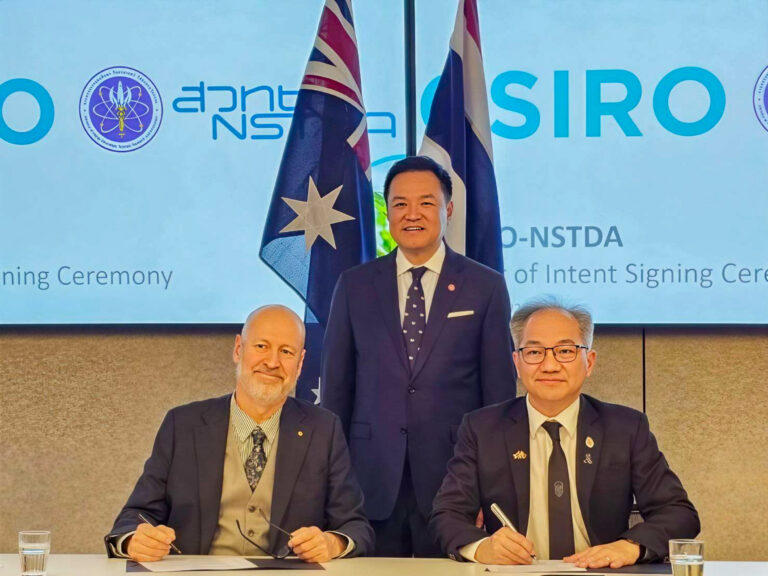
The LOI, signed during the Thai Prime Minister’s official visit to Australia and witnessed by senior representatives of both countries, marks a significant step in strengthening institutional cooperation between NSTDA and CSIRO. The expanded framework is intended to accelerate joint research, knowledge exchange and technology translation in areas with strong potential to deliver economic, social and environmental impact.
The visit also provided a platform for both organizations to review ongoing collaboration and identify new opportunities for future joint initiatives. Priority areas highlighted for further development include biologics and sustainable food innovation, where both NSTDA and CSIRO have established capabilities and complementary strengths. These areas offer clear pathways toward practical application, including bioprocess development and active pharmaceutical ingredients to support health and medicine security, as well as future food, alternative proteins and innovation ecosystems that promote long-term sustainability.
Further opportunities were also identified in advanced technologies for agriculture, particularly in precision agriculture, soil intelligence, crop planning and spatial data analytics. These capabilities are expected to support more efficient resource management, strengthen agricultural productivity and improve resilience to climate-related challenges.
In the environmental field, discussions also explored the application of CSIRO’s research infrastructure and expertise to Thailand’s emerging priorities, particularly in environmental monitoring and surveillance systems. This includes potential collaboration on integrated approaches to air-quality monitoring, such as PM2.5, combining sensor technologies, field-based observations, remote sensing and advanced data analytics.
Clean energy was another major area of focus. NSTDA and CSIRO discussed opportunities to deepen cooperation in hydrogen technologies, covering production, storage, transport and industrial applications, as well as battery recycling and the recovery of valuable materials from used batteries. These areas are increasingly important to the transition toward low-carbon energy systems, circular economy development and the expansion of electric mobility. Additional areas for further discussion include carbon capture, utilization and storage (CCUS) and other technologies that can contribute to greenhouse gas reduction and long-term energy sustainability.
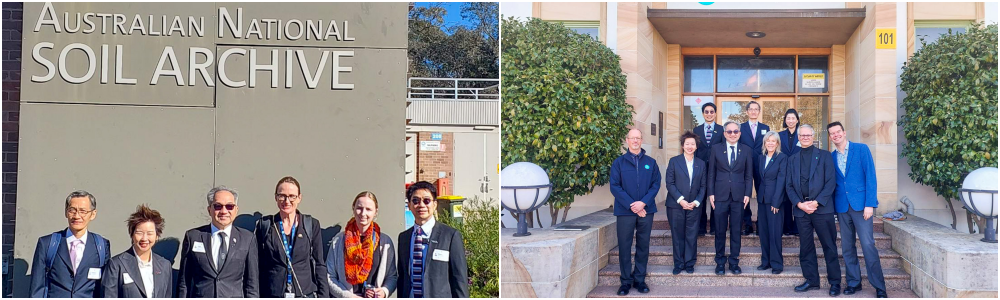
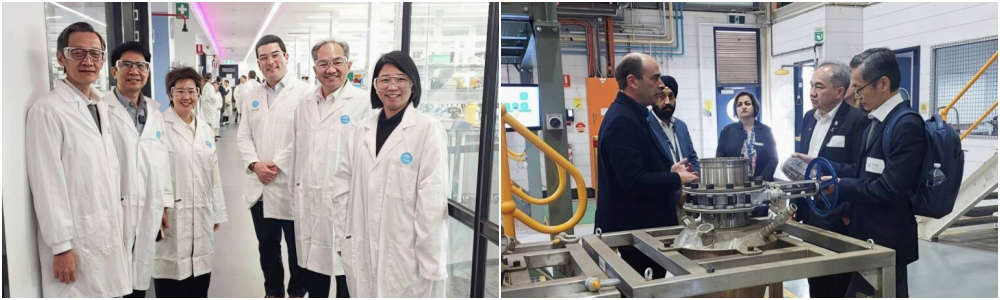
During the visit, the NSTDA delegation also engaged with several of CSIRO’s world-class research facilities and platforms in Canberra and Melbourne. These included the Australian National Soil Archive (ANSA), precision agriculture and remote sensing technologies, AquaWatch for integrated water-quality monitoring, the National Vaccines and Therapeutics Lab (NVTL), the Centre for Hybrid Energy Systems (CHES) and the Mixed Reality Lab of Data61. The engagements provided valuable insight into research capabilities with strong potential for future collaboration and adaptation to Thailand’s national priorities.
Beyond institutional dialogue, the visit helped establish stronger links between researchers from both organizations, laying the groundwork for more focused and outcome-oriented collaboration. The next phase will emphasize researcher matching, joint identification of research challenges, knowledge exchange and the development of collaborative projects aligned with shared priorities in food, health, agriculture, energy and the environment.
The strengthened NSTDA–CSIRO partnership reflects a shared commitment to using science, technology and innovation to address complex challenges and create tangible benefits for both countries and the broader region. By expanding collaboration in strategic areas, both organizations are positioning research and innovation as key drivers of sustainable and inclusive growth.