The National Science and Technology Development Agency (NSTDA), through the National Electronics and Computer Technology Centre (NECTEC), has advanced a research based screening technology for latent tuberculosis infection (LTBI), supporting faster and more accessible disease surveillance in Thailand.
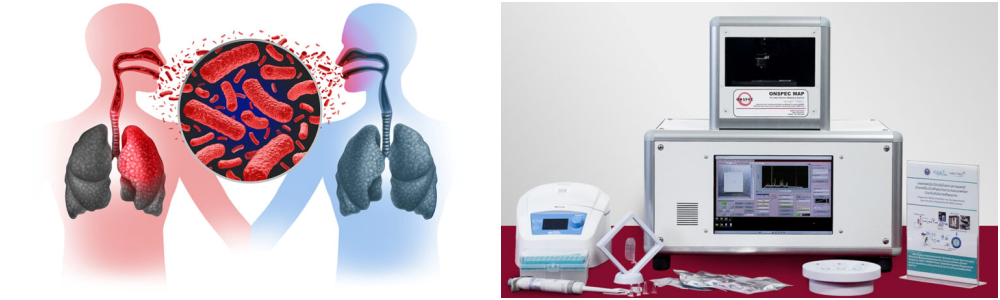
Developed in collaboration with the Research Centre for Emerging and Re-emerging Infectious Diseases (RCEID), Khon Kaen University, the Department of Disease Control, and hospitals in Health Region 7, namely Roi Et Hospital, Khon Kaen Hospital, Mahasarakham Hospital, and Kalasin Hospital, the innovation known as SERS-TB is designed to strengthen active case finding and support Thailand’s long-term efforts to end tuberculosis. The research and development of SERS-TB has also been supported by Open Philanthropy, an independent organization based in the United States.
Tuberculosis remains a major public health challenge. According to the research background highlighted by the project team, around one in four people worldwide carry latent TB infection. In contrast, 5–10 percent of infected individuals may later develop active disease that can spread to others. Early identification of high-risk groups is therefore a key part of effective TB control.
SERS-TB was developed as a rapid screening tool for latent tuberculosis infection using just one drop of blood. The system combines Raman spectroscopy, which detects the molecular “fingerprint” of substances, with artificial intelligence to distinguish latent TB from non-infected cases. The analysis can be completed in around 30 minutes, making the platform suitable for proactive screening in both clinical and field settings.
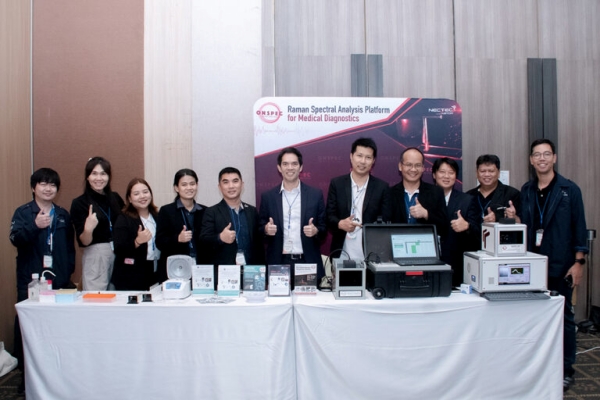
A key strength of technology lies in its portability and ease of use. The device is designed for deployment outside major laboratory settings, allowing healthcare teams to carry out screening more conveniently in outreach operations. The fact that the platform can be produced domestically also creates opportunities to reduce dependence on imported technologies and improve cost control for future public health use.
Since 2024, the research team has used more than 1,000 blood samples from latent TB and non-TB individuals to train the AI system to recognise differences in Raman signal patterns. Current results show that AI can analyse samples with an accuracy of more than 80 percent. The team aims to further improve performance through model refinement, expansion of sample datasets, and stronger sample-quality control before moving toward medical device registration.
The development of SERS-TB reflects NSTDA’s role in translating advanced technologies into practical health innovations. By integrating spectroscopy, AI, and portable system design into a rapid screening platform, the project demonstrates how interdisciplinary research can be transformed into tools that respond directly to national healthcare needs. If successfully adopted in service settings, the technology could expand access to screening, accelerate active surveillance, and contribute to more effective tuberculosis control in Thailand.