
In a significant leap for agricultural technology, the National Nanotechnology Center (NANOTEC) of the National Science and Technology Development Agency (NSTDA) has introduced NANO nCote, a pioneering Controlled Release Fertilizer (CRF) designed to revolutionize how farmers nourish their crops.

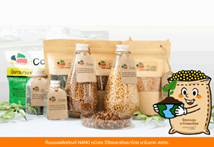
By integrating advanced nanotechnology with environmental consciousness, this innovation addresses the critical inefficiency of traditional fertilizers, which often see up to 60% of their nutrients lost to the atmosphere or water systems.
The core of NANO nCote lies in its sophisticated nanocomposite coating. Utilizing a modified natural-based polymer, this biodegradable film acts as a smart barrier that regulates the release of essential nutrients (N-P-K). Instead of dissolving instantly, the fertilizer is dispensed gradually through the film, aligning perfectly with the plant's growth cycle. This mechanism ensures that plants can absorb more than 90% of the nutrients provided, a staggering improvement over the 40–60% efficiency found in conventional products.
Beyond boosting productivity, NANO nCote serves as a powerful tool in the fight against climate change. Standard urea fertilizers are a major source of Nitrous Oxide, a greenhouse gas with a global warming potential 265 times higher than Carbon Dioxide. By preventing rapid nutrient evaporation and runoff, this smart fertilizer significantly mitigates environmental damage, protects local water sources from algae blooms, and prevents soil degradation.
The practical benefits for farmers are equally transformative. Field trials conducted in major rice-producing regions like Pathum Thani and Suphan Buri have demonstrated that NANO nCote can increase crop yields by over 10% while requiring only a single application per season. This "one-and-done" approach drastically reduces labor costs and the quantity of fertilizer needed for economic crops such as rice, sugarcane, and maize.
As NSTDA continues to drive the Bio-Circular-Green (BCG) Economy Model, NANO nCote stands as a testament to how science can empower the agricultural sector. NSTDA is currently inviting industrial partners to collaborate on scaling this technology for commercial production, aiming to bring this sustainable and cost-effective solution to the global market.