NSTDA continues to strengthen the practical application of research through international knowledge exchange on intellectual property management and technology transfer. Through its Technology Licensing Office, NSTDA hosted a special seminar on “IP Portfolio Management” featuring Dr. Alison Campbell, Chief Executive Officer of the UK’s Government Office for Technology Transfer (GOTT), to share global perspectives on how public research organisations can manage intellectual property more strategically to maximise research value and impact.
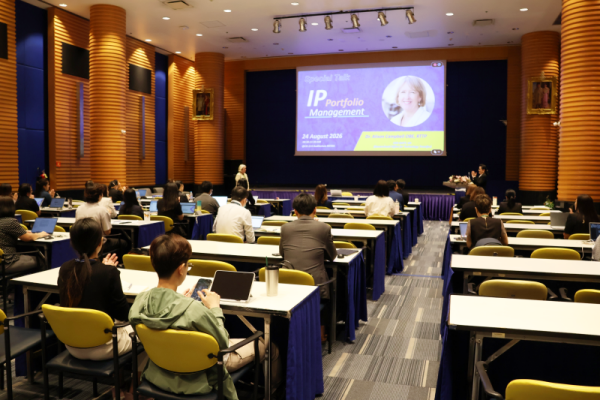
The seminar, titled “Global Perspectives on IP Portfolio Management in Public Research Organizations,” highlighted approaches used by leading public research institutions to manage intellectual property portfolios in a systematic and outcomes-oriented manner. Dr. Campbell emphasised that effective IP portfolio management is not only an administrative function, but also a strategic mechanism for increasing the value of research, supporting technology transfer, and improving the pathway from research outcomes to practical application.
Her lecture focused on key principles for strengthening portfolio management, including the use of data and performance metrics to guide decision-making, the assessment of technology licensing potential, and the strategic review of intellectual property assets to ensure that investments remain aligned with institutional priorities and long-term goals. She also underlined the importance of making informed decisions on which technologies should be protected, developed, licensed, or discontinued in order to achieve both efficiency and impact.
The session provided participants with practical insights into how systematic IP portfolio management can help public research organisations allocate resources more effectively, reduce unnecessary costs, and improve the commercial readiness of technologies developed through research. It also reinforced the role of intellectual property as an important tool for translating scientific knowledge into innovation, industry application, and broader socio-economic benefit.
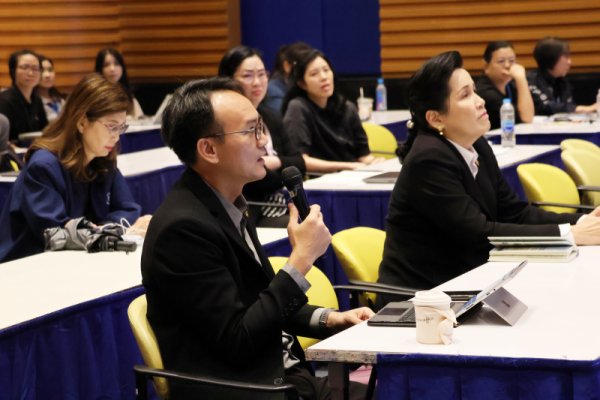
The seminar served as a valuable platform for NSTDA executives, researchers, and technology transfer professionals to gain international perspectives that can support the development of stronger research commercialisation strategies in Thailand. By learning from global best practices, NSTDA continues to enhance its capacity to move research beyond the laboratory and towards tangible use, investment potential, and national impact.
In addition to the lecture, Dr. Campbell also exchanged views with NSTDA researchers and related teams on research translation and the strategic management of innovation, further contributing to dialogue on how intellectual property can support emerging technologies and future collaboration.