
The National Science and Technology Development Agency (NSTDA), through the National Metal and Materials Technology Center (MTEC), has developed a process to convert dolomite powder, a byproduct of mineral processing, into an alternative cementitious material for use in mortar and concrete.
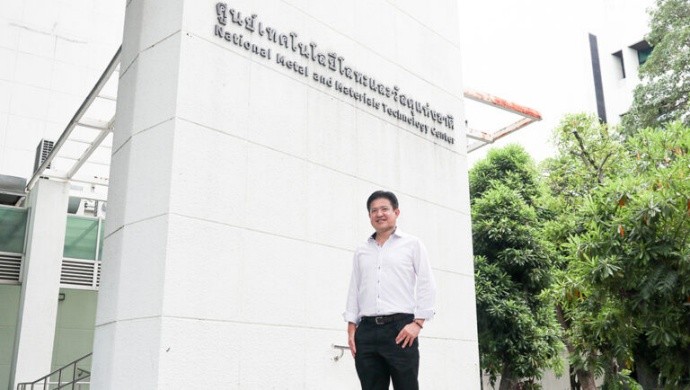
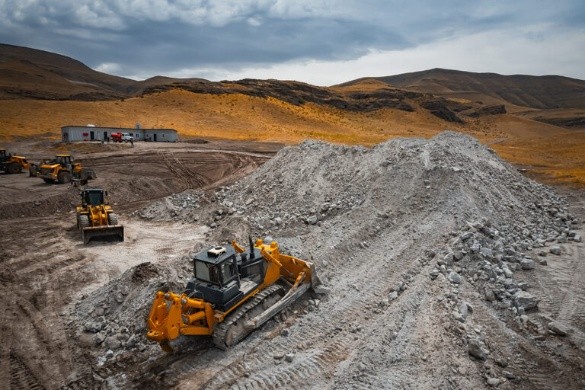
The National Science and Technology Development Agency (NSTDA), through the National Metal and Materials Technology Center (MTEC), has developed a process to convert dolomite powder, a byproduct of mineral processing, into an alternative cementitious material for use in mortar and concrete. The innovation aims to help Thailand’s construction and mining sectors reduce greenhouse gas emissions and strengthen their competitiveness under emerging carbon regulations such as the EU’s Carbon Border Adjustment Mechanism (CBAM).
The research team, led by Dr. Pitak Laoratanakul, Team Leader of Sustainable Cement and Composite Materials Research Team, Ceramics and Construction Materials Research Group at MTEC-NSTDA, has successfully modified waste dolomite (CaMg(CO₃)₂) through particle-size control and surface treatment to obtain a material with properties similar to cement. When used to replace about 25–40% of Portland cement in mortar formulations, tests show that the resulting products still meet industrial strength standards. Because standard cement production emits around 0.7–0.9 tons of CO₂ per ton of cement, substituting part of the cement with treated dolomite significantly reduces the carbon footprint of the product.
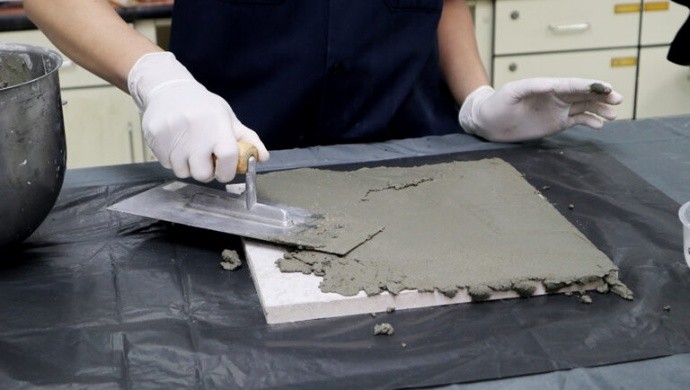
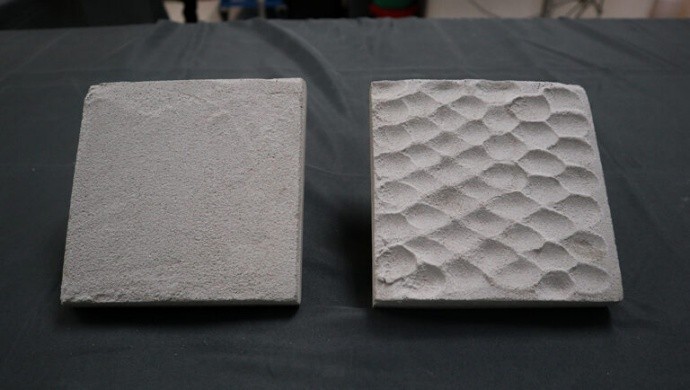
Using upgraded dolomite not only reduces emissions but also adds value to low-grade mineral residues that would otherwise be landfilled, thereby promoting more efficient use of natural resources in line with Thailand’s circular economy policy. The technology has already achieved pilot-scale production and is ready for technology transfer. MTEC is working with relevant government agencies to amend regulatory frameworks so that resource owners can process and upgrade their own mineral by-products, helping to reduce raw-material transport emissions and production costs.
NSTDA expects this green cement alternative to support Thailand’s drive toward Net Zero and to help Thai producers comply with tightening global climate measures, especially CBAM, which targets products with high embedded carbon. By enabling the domestic production of low-carbon construction materials from industrial by-products, the project supports the transition of Thai mining and construction towards greener operations while enhancing long-term export competitiveness in carbon-conscious markets. The work is supported by the Department of Primary Industries and Mines, Compound Clay Co., Ltd., and Jorakay Corporation Co., Ltd., reflecting strong collaboration between the public sector, researchers and industry.