
On 24 June 2026, Dr. Piyawut Srichaikul, Deputy Executive Director of the National Electronics and Computer Technology Center (NECTEC), welcomed a regional delegation participating in the AI Visionaries Program – Strategy & Governance Master Class 2026, an international programme for policymakers and regulators from across the Asia-Pacific region, including Bangladesh, Bhutan, Indonesia, Lao PDR, Malaysia, Maldives, the Philippines, Timor-Leste, and Viet Nam.
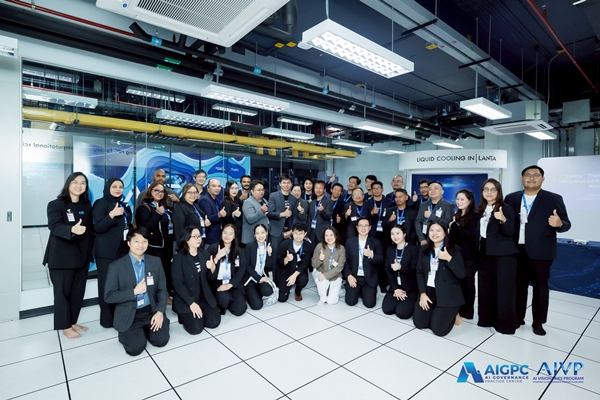
The visit formed part of a pilot initiative aimed at translating AI governance principles into practical policy implementation. It also aligns with Thailand’s National AI Strategy and Action Plan (2022–2027), particularly the advancement of AI governance, and supports the development of the AI Governance Practice Centre (AIGPC) as a platform for strengthening policy and implementation capabilities.
During the visit, NECTEC introduced key research, services, and infrastructure that contribute to Thailand’s science, technology, and innovation ecosystem.
Among the highlights was LANTA HPC, a high-performance computing system that supports computational science research, AI development, and big data applications. The system is actively used by universities, research organizations, and industry, including for AI model training and PM2.5 simulation studies.
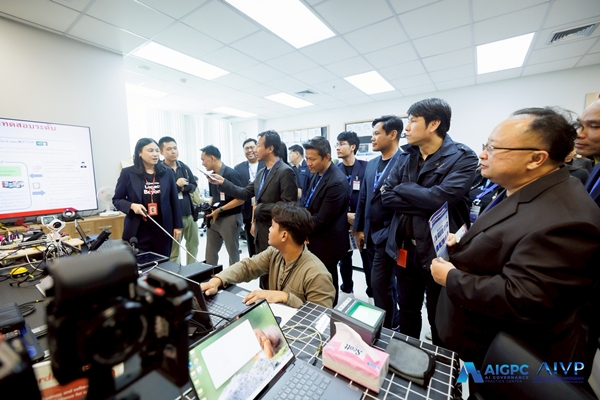
NECTEC also presented Pathumma LLM, a Thai-developed multimodal large language model capable of processing text, audio, and visual data. Demonstrations included potential applications for the public sector, such as official document drafting, meeting transcription and summarization, and question answering based on document content.
In addition, the delegation learned about AI standard testing and software quality assurance services provided by NECTEC’s Software Quality Testing (SQUAT) laboratory, which help strengthen the competitiveness of Thai enterprises and support the adoption of trustworthy AI systems.
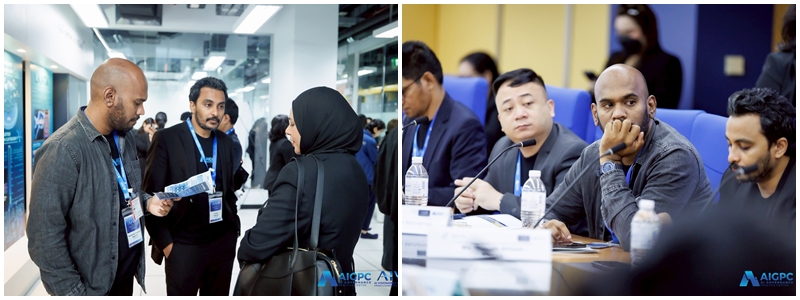
The programme also included a tour of NECTEC’s facilities, including the LANTA supercomputer room and the SQUAT laboratory, offering participants first-hand insight into the centre’s advanced digital infrastructure and testing capabilities.
The visit reflected growing regional interest in practical AI governance, research infrastructure, and quality assurance mechanisms, while opening opportunities for future collaboration at both national and international levels.