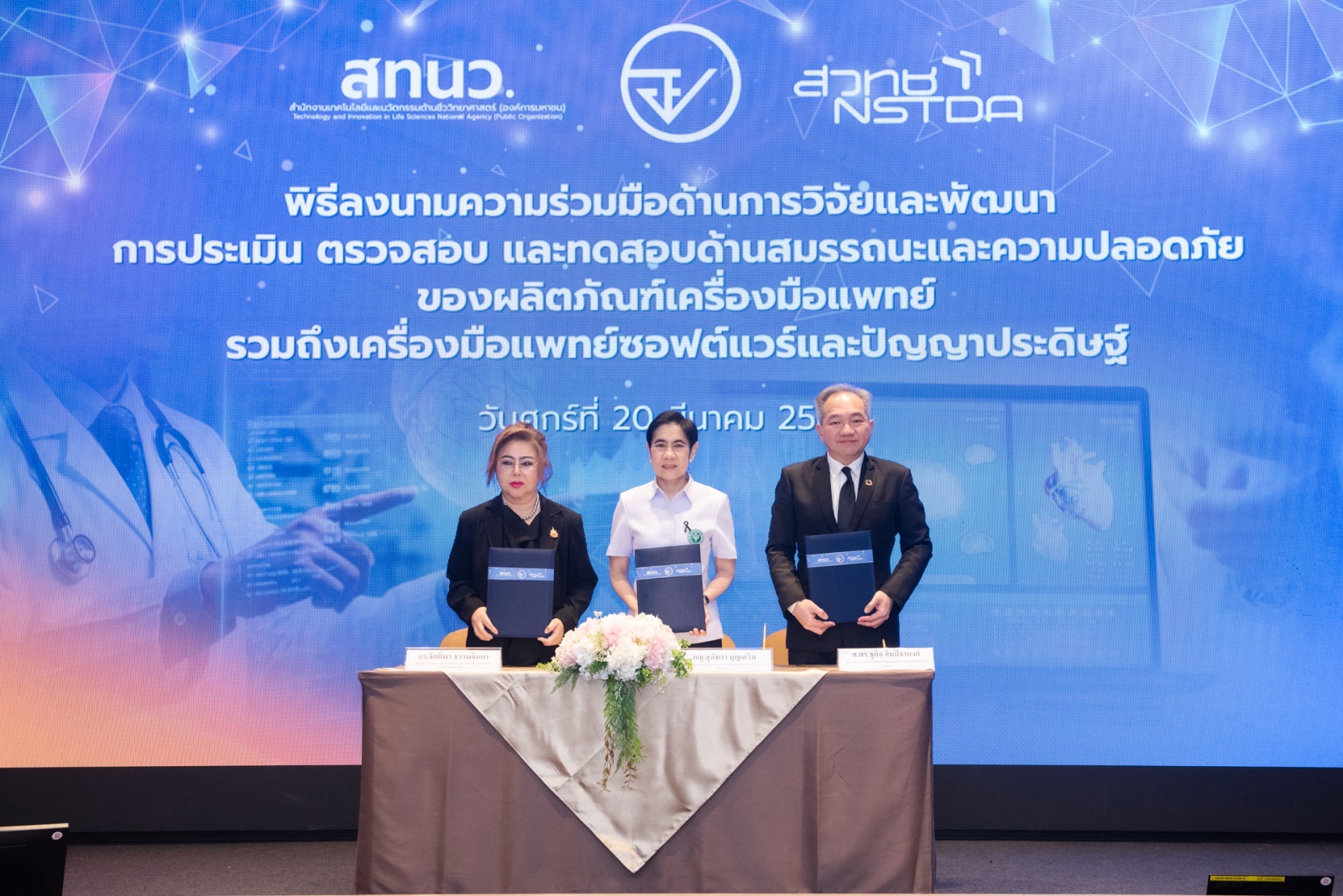
On 20 March 2026 at the Mandarin Hotel Bangkok, the Ministry of Higher Education, Science, Research and Innovation (MHESI), through the National Science and Technology Development Agency (NSTDA) and its NECTEC center, together with the Thai Food and Drug Administration (FDA), the Technology and Innovation in Life Sciences National Agency (Public Organization) (TILSNA), and the Radiological Society of Thailand (RST), hosted the event “AISaMD Demo Day: The First Step for Thai AI-based Medical Devices Toward Global Standards.”
The event showcased Thailand’s progress in developing medical artificial intelligence technologies and promoted their safe and reliable adoption in real-world clinical settings.
The event featured five AI-based medical device solutions that have undergone testing in accordance with international standards. This milestone strengthens Thailand’s capacity to assess the performance and safety of medical AI systems. The program also included the signing of two Memorandums of Understanding:
- a collaboration on product testing and performance evaluation among NSTDA, TILSNA, and the FDA, and
- a collaboration between NECTEC–NSTDA and the RST to develop evaluation criteria and testing services for AI-based medical devices.
These efforts aim to elevate both technical and clinical standards to ensure readiness for practical use in healthcare environments.
Under this partnership, NSTDA serves as the national research and testing hub, utilizing internationally accredited laboratories to support evaluations of hardware, software, and medical AI systems. The Thai FDA provides regulatory oversight and consultation to developers from early development stages to ensure compliance with legal and international requirements. TILSNA focuses on fostering innovation, supporting commercialization, and connecting developers with funding opportunities. The Radiological Society of Thailand contributes clinical expertise by establishing standards for medical image interpretation, selecting reference datasets, and conducting clinical performance evaluations, ensuring AI can be effectively implemented in hospitals nationwide.
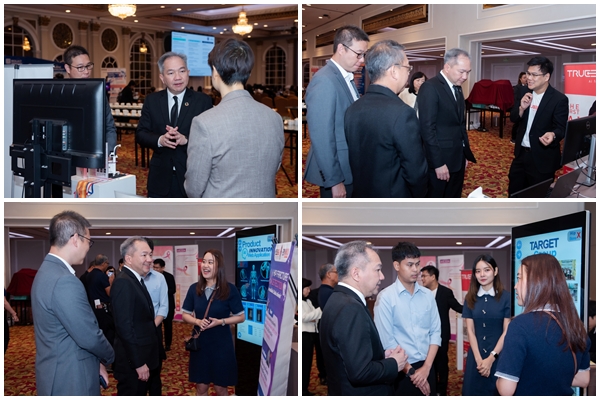
The showcased products cover several medical domains, including an AI system for abdominal abnormality screening, a retinal image–based disease risk assessment system, a hip fracture detection tool using X-ray images, a liver cancer screening system using ultrasound, and a cloud-based breast cancer screening platform. All innovations were tested using evaluation standards developed through the AISaMD initiative.
Entering its second year, the AISaMD project will focus on strengthening evaluation criteria, integrating engineering and clinical data, and supporting developers in navigating the regulatory process for medical device registration. This initiative is expected to play a pivotal role in positioning Thailand as a leading hub for medical AI innovation in the region.