
The National Center for Genetic Engineering and Biotechnology (BIOTEC), NSTDA, organized the 1st Thailand Streptococcus suis Seminar 2026 under the theme “One Health Streptococcus suis: From Research to Preventive Approaches for Public and Animal Health Safety.” The event provided a platform for researchers, public health professionals, veterinarians, and policymakers to exchange knowledge on the epidemiology, antimicrobial resistance (AMR), and genomic epidemiology of Streptococcus suis.
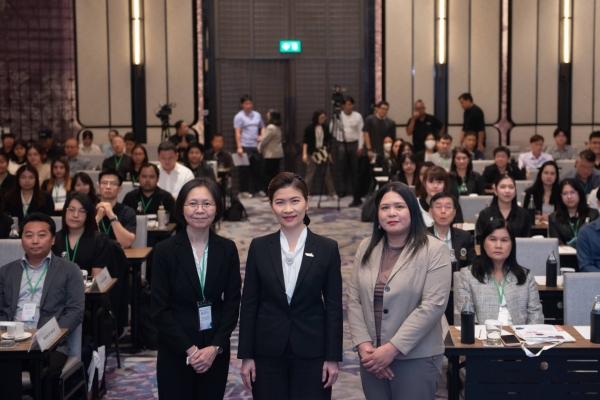
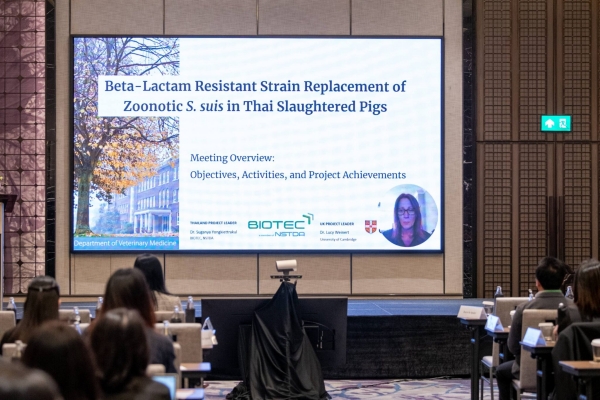
The seminar was held as a key activity under the collaborative research project between the University of Cambridge and BIOTEC-NSTDA, entitled “Beta-Lactam Resistant Strain Replacement of Zoonotic Streptococcus suis in Slaughtered Pigs from Thailand: Global Risks to Food Security and Public Health.” The two-year project is supported by the United Kingdom’s International Science Partnerships Fund (ISPF) through the British Council, with funding of GBP 79,509.60.
Led by Prof. Dr. Lucy Weinert of the University of Cambridge and Dr. Suganya Yongkiettrakul of BIOTEC, NSTDA, the project investigates the prevalence and genomic epidemiology of S. suis in slaughtered pigs, as well as the genetic mechanisms underlying resistance to beta-lactam antibiotics. The findings are expected to support the development of surveillance systems, risk assessment, and evidence-based disease prevention measures in Thailand.
The seminar served not only as a platform for exchanging scientific knowledge and research advances, but also as an important starting point for building a collaborative network among researchers, medical professionals, veterinarians, government agencies, industry, and international partners. The network aims to advance the application of genomic epidemiology as an integral part of disease surveillance and antimicrobial resistance monitoring systems, contributing to stronger health security, enhanced consumer safety, and the long-term sustainability of Thailand’s swine industry.