
NSTDA through the National Metal and Materials Technology Center (MTEC), has developed a new soft material for 3D printing to create realistic organ models for medical training in Thailand. The innovation is designed to help improve procedural accuracy, reduce medical errors, and lower the risk of complications, particularly for complex procedures that require a high level of surgical skill.
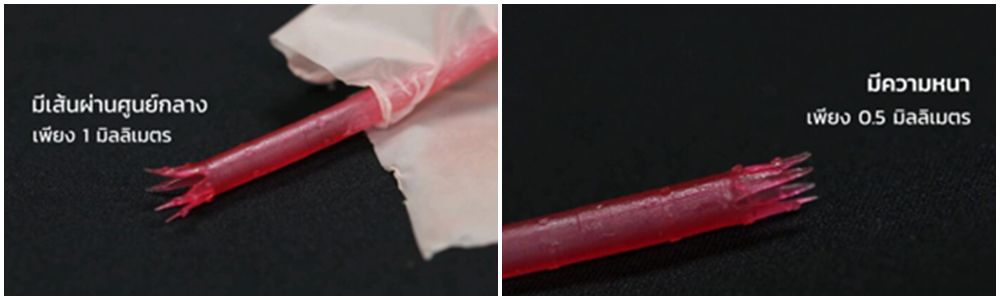
One of the key outcomes of this research is a highly realistic fallopian tube model developed for training in female sterilization procedures. Produced using LCD 3D printing and a specially formulated photosensitive resin, the model closely replicates the shape, structure, and mechanical properties of a real human fallopian tube. According to the research team, the tube has a diameter of only 1 mm. and a wall thickness of 0.5 mm., making it extremely difficult to manufacture using conventional methods.
The research was led by MTEC’s Specialized Materials for Engineering Applications Research Team, reported that the model provides realistic softness and handling characteristics, enabling obstetricians, gynecologists, and resident doctors to practice the procedure more effectively and with greater confidence. The project was carried out in collaboration with the Faculty of Medicine Ramathibodi Hospital, Mahidol University, and the Faculty of Medicine, Naresuan University, with support from Ramathibodi’s Medical Innovation Development Center, Naresuan University, and the RECO - Explore Program under PMU-C.
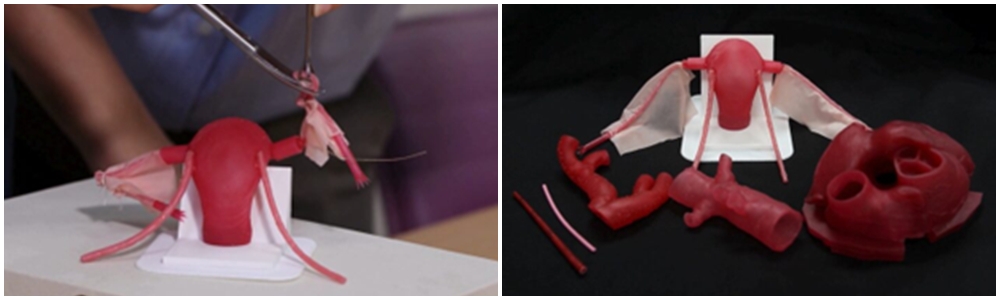
Beyond the Fallopian tube model, the specially developed resin offers broader potential for medical applications. The material is soft, flexible, and can be tuned to mimic the mechanical properties of real organs. It can also withstand suturing and be used to produce complex hollow structures using affordable 3D printers, including models of the heart, blood vessels, bile duct, and fallopian tube structures that are difficult to fabricate using conventional mold-casting methods.
Customizable 3D printed Soft Materials for Advanced Medical Uses, won three awards at the 49th International Exhibition of Inventions Geneva: a Silver Medal, the FIRI Award for the Best Invention, and the NRCT Honorable Mention Award. The achievement reflects NSTDA’s role in advancing high-value materials research and translating it into practical innovations that strengthen medical training and healthcare capabilities in Thailand.