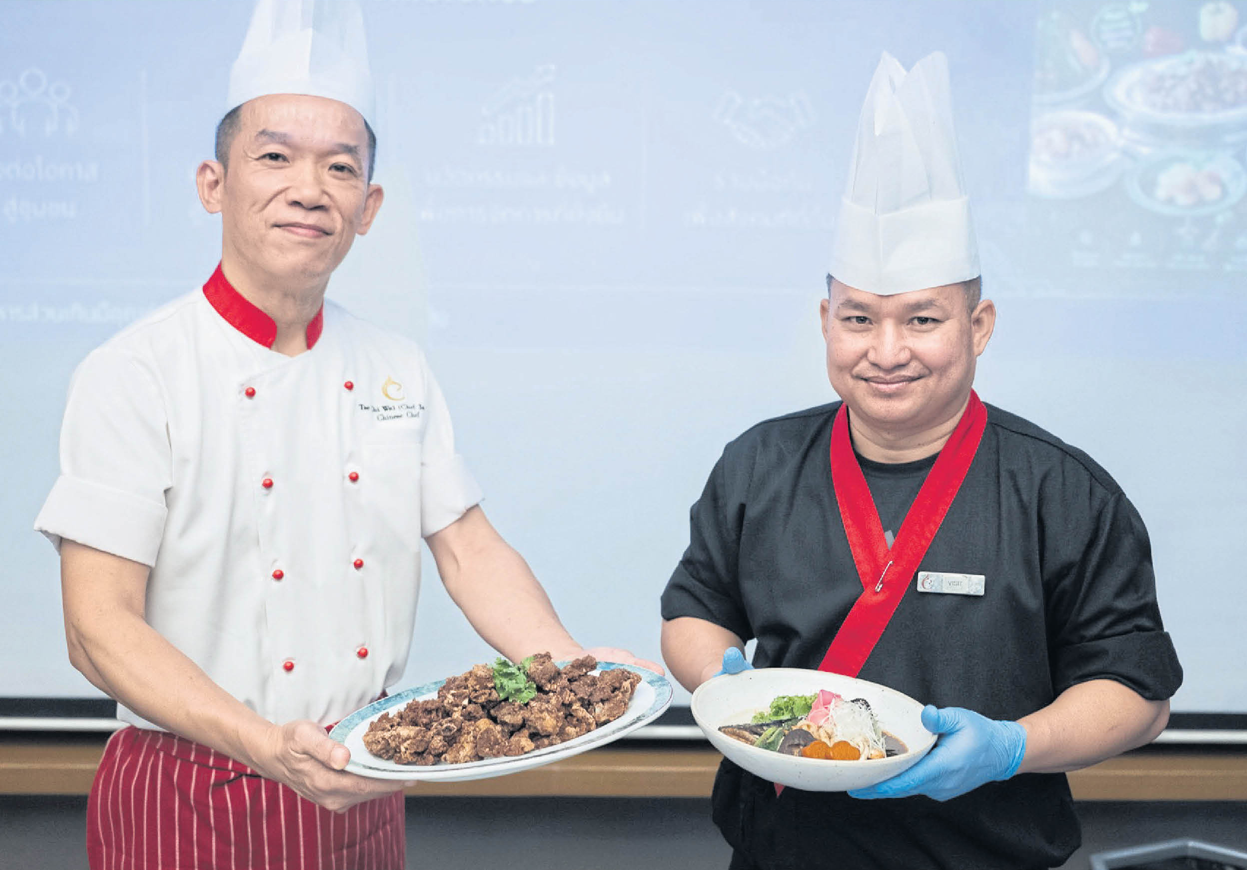
A national initiative is converting healthy surplus food into community meals to feed vulnerable people
Chef Toi orders 70kg of salmon per week to ensure an adequate supply of ingredients. However, some salmon heads go unused.
“It could fill other bellies,” said the chef of Hagi at Centara Grand at Central Plaza Lardprao Bangkok.
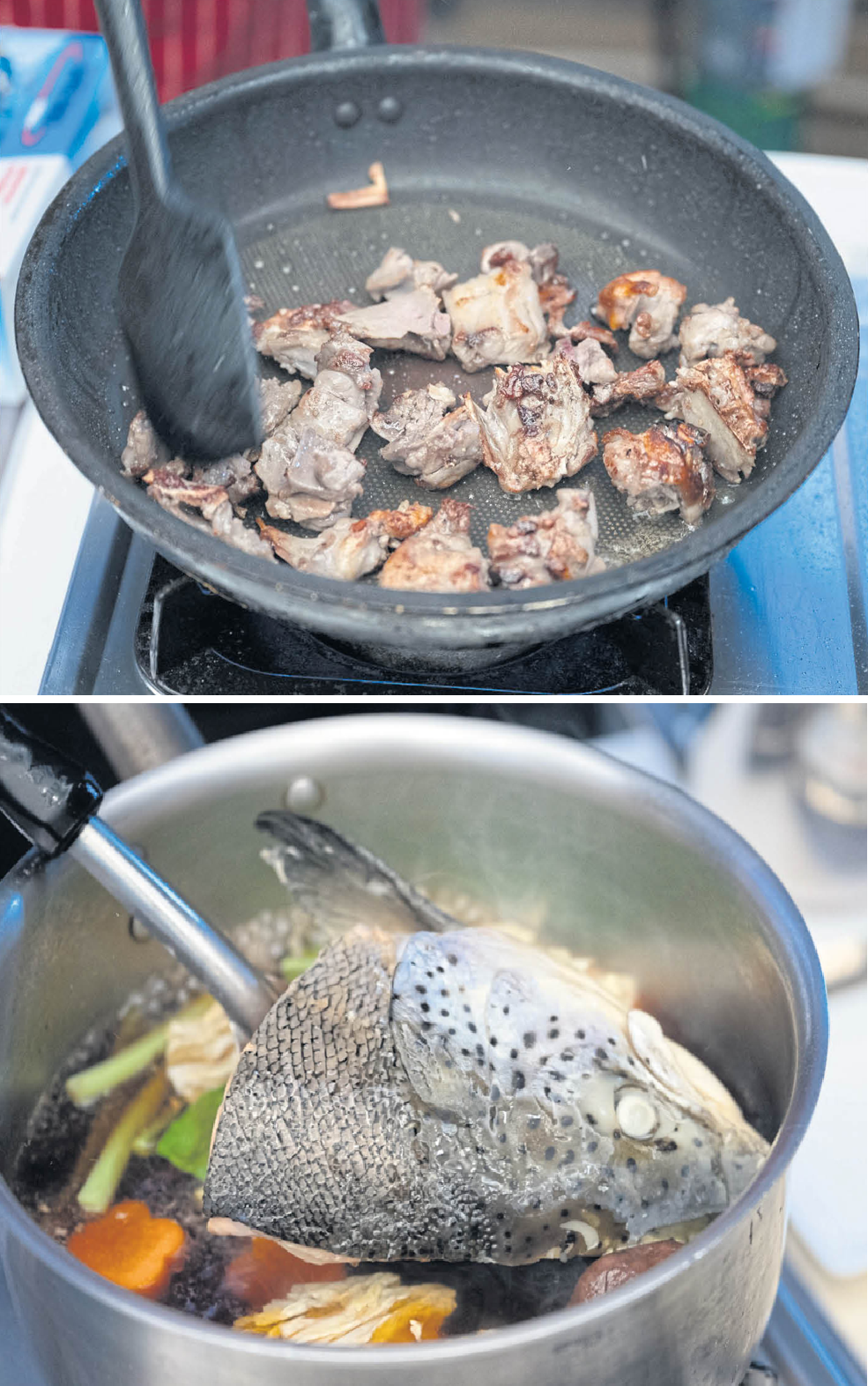
After preparing salmon heads, the chef blanches them to clear the fishy smell. He stirs soy sauce, sake, mirin and sugar in a new pot until they blend well and then adds mature ginger for a fragrant flavour.
He then cooks blanched salmon heads in the broth, followed by daikon, carrot and shiitake mushrooms, simmered over moderate heat until they are done.
A bowl of soy-braised salmon head is just one example of how chefs can give surplus food new life.
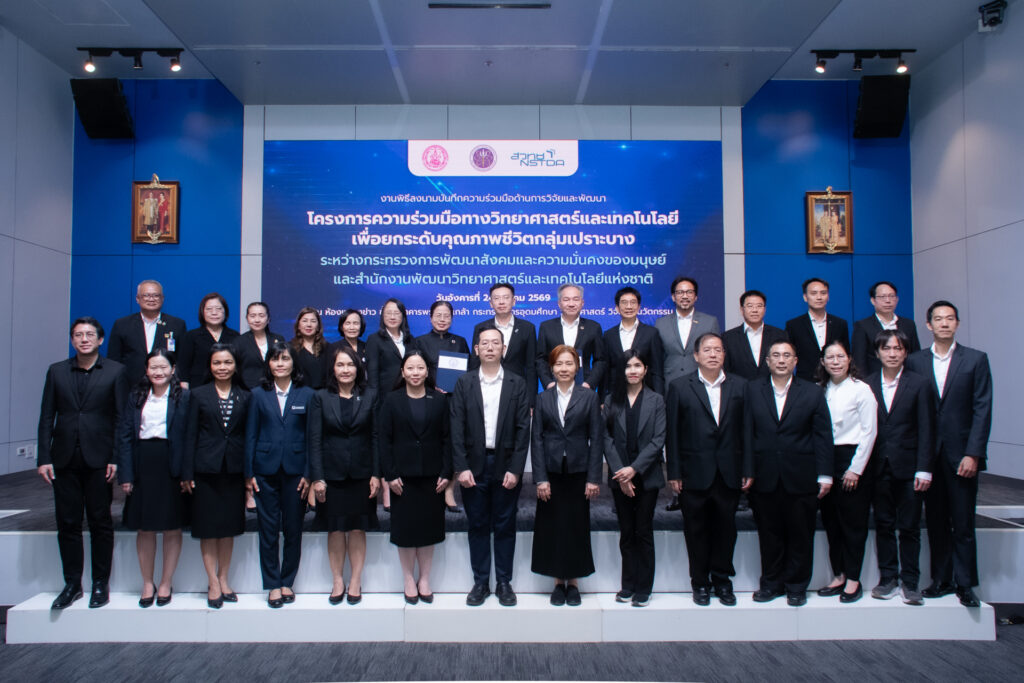
Hagi has joined other businesses in donating surplus food to Thailand’s Food Bank. Founded in 2024, the five-year project is a collaboration between the National Science and Technology Development Agency (NSTDA) and the Scholars of Sustenance Foundation.
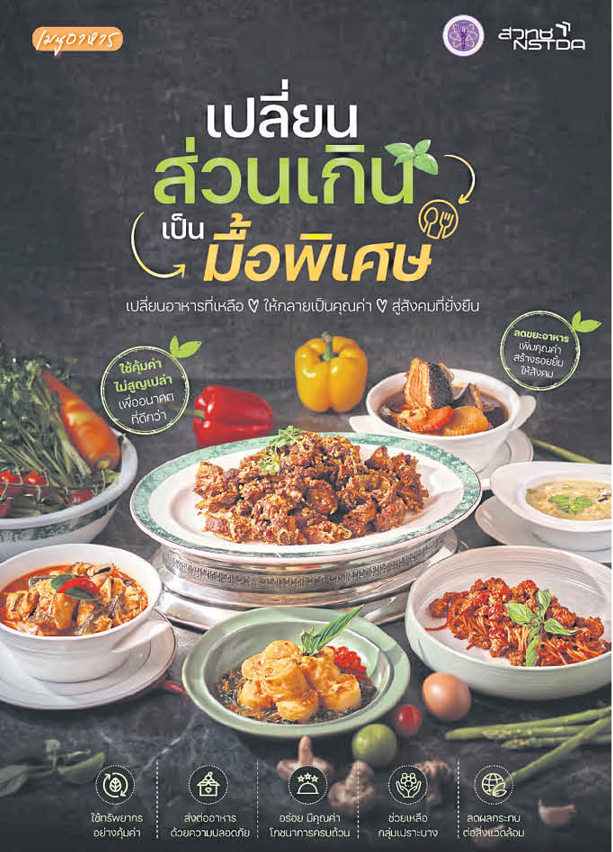
Earlier this month, the NSTDA published a new 23-dish cookbook that provides step-by-step instructions for turning unused food into creative dishes, including salt and pepper duck, tofu cheese croquettes and bagels with scrambled egg.
“Surplus food is safe and edible,” said Worawarong Rakreungdet, deputy executive director of NSTDA.
Despite planning, surplus food is the result of ordering more than is needed. Unlike food waste, surplus food is suitable for consumption, but is excluded from the loop.
According to data by the Pollution Control Department in 2022, Thailand generated 9.7 million tonnes of food waste, making up 38% of total municipal waste. At least 39.5% of that food waste was edible.
In 2025, Thailand’s Food Bank rescued around 2,000 tonnes of surplus food. In 2026, the project is aiming for 5,000 tonnes and by 2028, it plans to hit a target of 20,000 tonnes. Confusion and stigma, however, remain obstacles to collection.
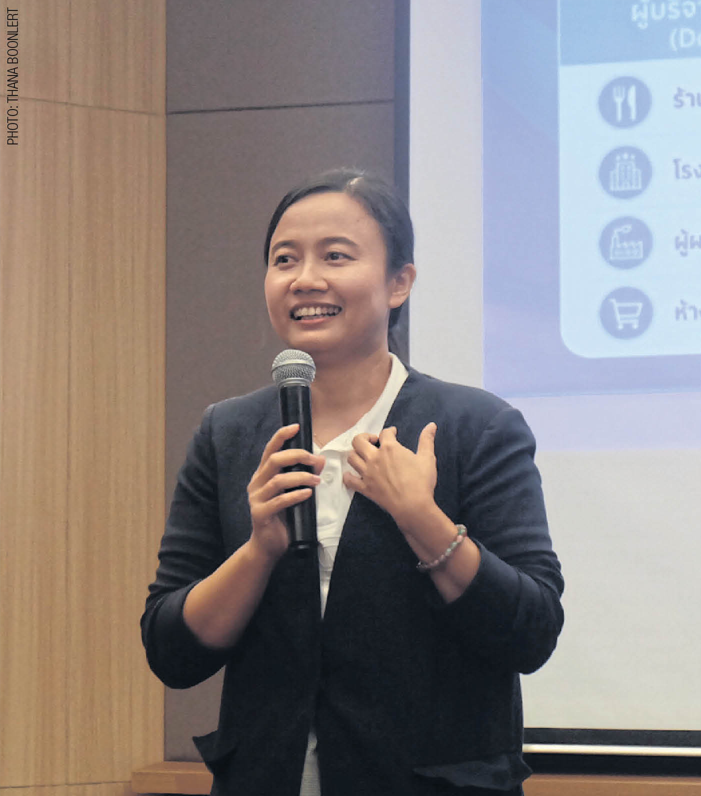
Pattamaporn Prachomrat, a senior policy researcher at NSTDA and project leader of Thailand’s Food Bank, insisted that surplus food remains safe for consumption.
“For example, a buffet lunch that lays untouched on the table is surplus food. But if it is partly eaten and left on the plate, it will be thrown away,” she said. “Surplus food and food waste are at different stages. If we don’t rescue surplus food, it will go to waste.”
Pattamaporn explained that if properly managed, surplus food remains fit for consumption, including products that have not passed their best-before dates.
“Legally speaking, ‘best-before’ indicates when products have the best flavour or freshness,” she explained.
“Once the date passes, quality may decline, but they remain edible for a couple of days or a week afterward. On the other hand, ‘expiry’ means products are no longer allowed for sale or distribution. Yet, the problem is that manufacturers apply blanket expiry dates to their products.”
In the US, no federal regulations require standard food labels except for baby formula. Many discard food nearing its best-before date, which simply shows when taste or quality is at its peak.
“Campaigners blame dates printed on packages for encouraging people to discard food,” said Pattamaporn.
She explained that safety guidelines for food donations, which came into use last year, list products that remain fit for consumption after best-before dates if they are kept in good condition.
“SURPLUS FOOD IS SAFE AND EDIBLE”
For example, eggs that are stored at room temperature are safe and edible for two months even though they have passed their peak. Still, the functional properties of egg protein may change and should be tested prior to cooking.
Pattamaporn said the Food Bank project is finding more partner donors to increase dietary variety. It has produced surplus food recipes and a nutritional database to plan the delivery of a well-balanced, healthy diet.
For example, some foods, like bakery and ice cream, are kept at a minimal level if children, elders and patients with non-communicable diseases are concentrated in designated areas.
By the end of this year, Thailand’s Food Bank will operate in 12 provinces and by 2028, it will cover at least 30 provinces.
“Local volunteers are like our arms and legs,” said Pattamaporn.
Built on the success of the Scholars of Sustenance Foundation, which operates in four provinces, Thailand’s Food Bank goes the extra mile to mitigate hunger. It has trained local volunteers to manage, deliver, and cook surplus food to their communities.
Priority is given to those who are homebound or elders who live alone. The project recently handed surplus food to around 30,000 seniors in Nakhon Sawan.
“Once the project comes to an end, food banks will live on,” Pattamaporn said.
Recently, the NSTDA introduced a new way to convert greenhouse gas emission reductions from recovering and donating surplus food into carbon credits. Businesses can use them for domestic and international sustainability reporting.
However, there remain other challenges. Pattamaporn said donors are liable to pay tax, even though they give away surplus food.
“Businesses donate to the extent that they can cover tax and destroy the rest,” she said. “Currently, stakeholders are discussing the possibility of granting tax benefits to certified donors.”
Pattamaporn stressed that food banks are not donating “leftovers” to those in need.
“Surplus food is safe and edible. It can be as savoury as dishes in cookbooks. It can make people full and happy,” she said.
STORY: THANA BOONLERT
Bangkok Post TUESDAY, SEPTEMBER 15, 2026
https://www.bangkokpost.com/life/social-and-lifestyle/3319793/from-wasteto-the-plate?ref=%2Flife%2Fsocial-and-lifestyle%2F3319793%2Ffrom-wasteto-the-plate&utm_source=taboola&utm_medium=deeperdive&utm_campaign=oc