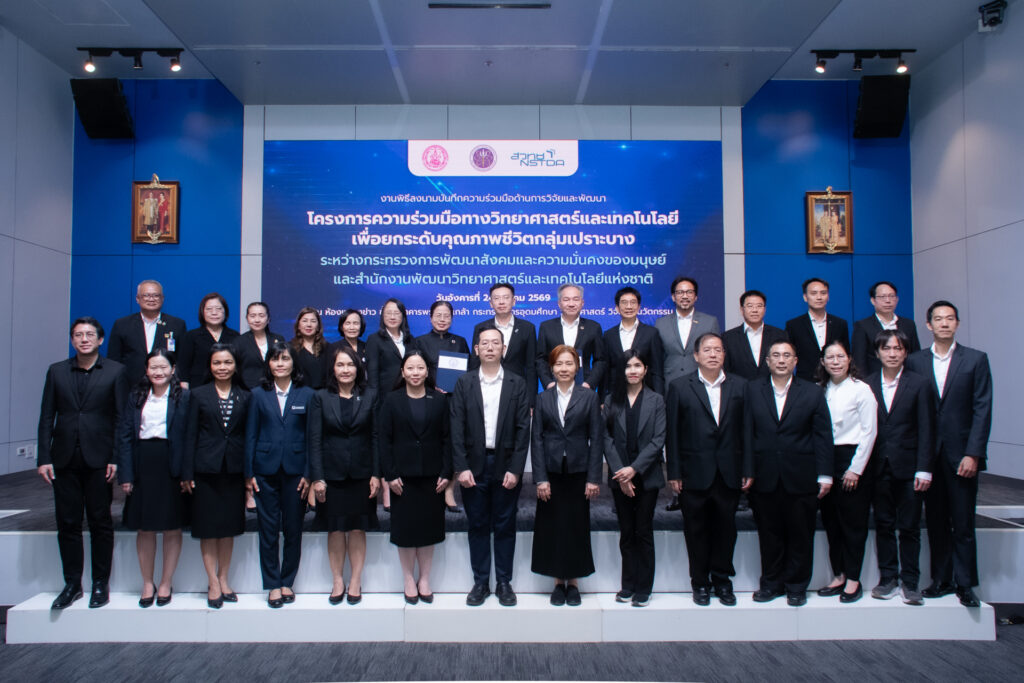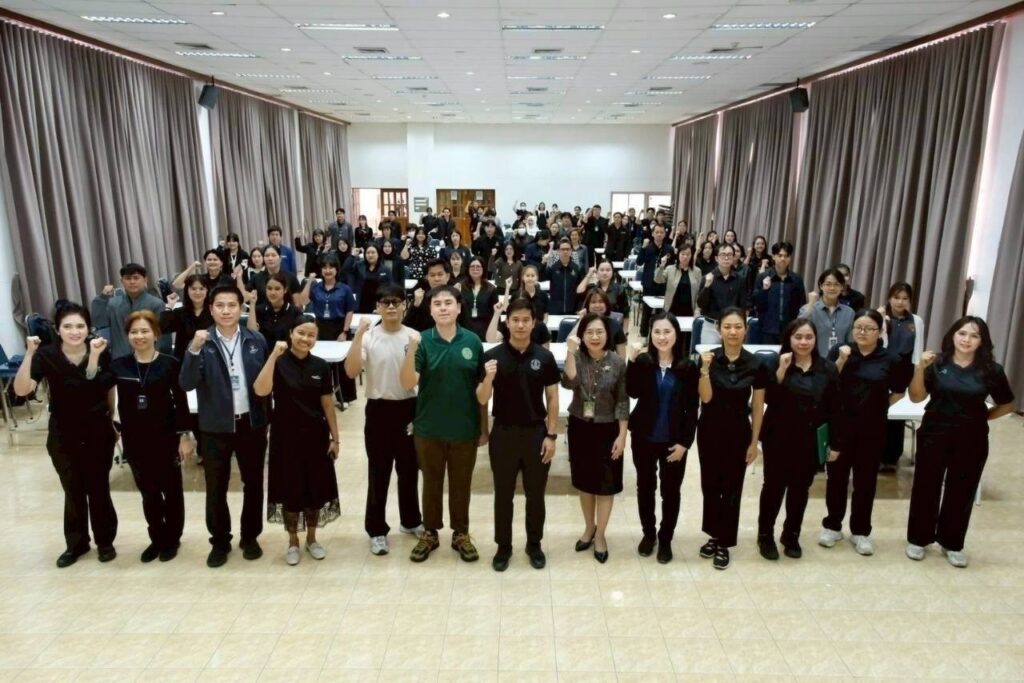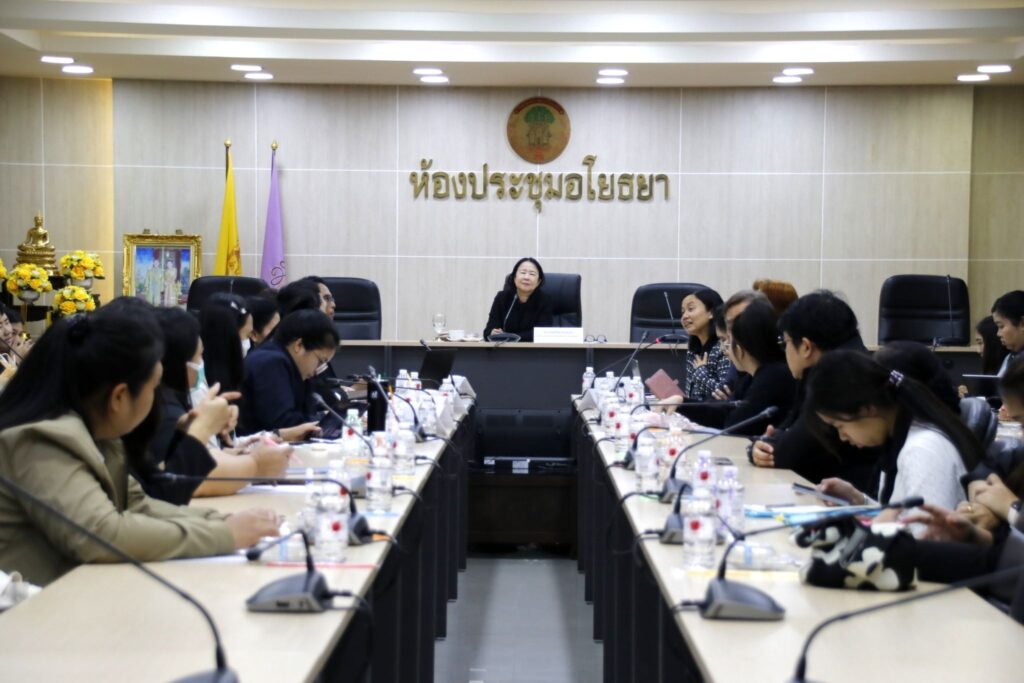
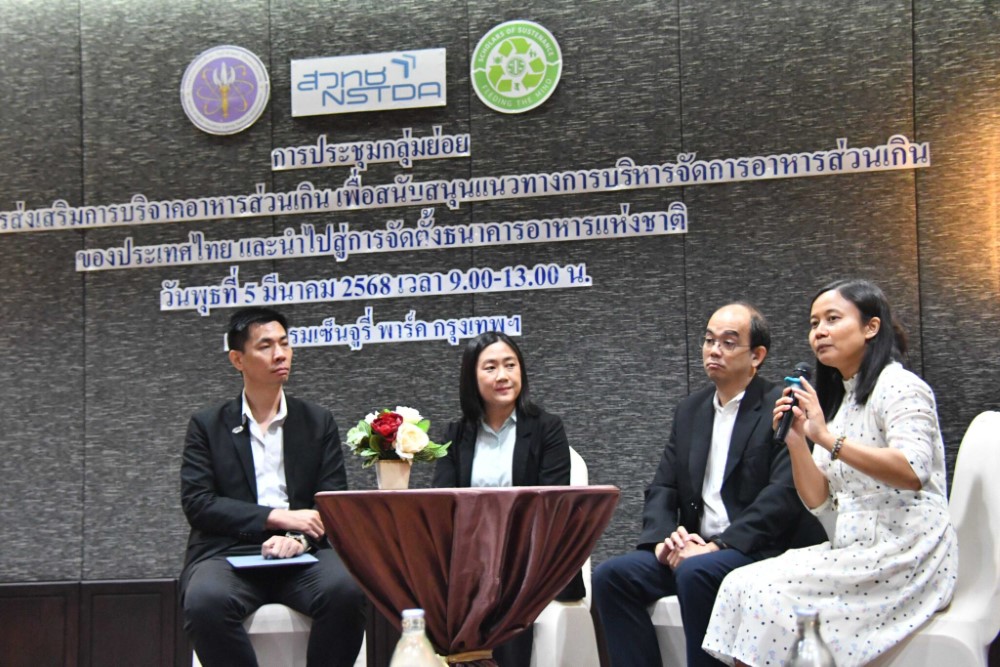
(5 March 2025, Century Park Hotel, Bangkok) The National Science and Technology Development Agency (NSTDA), in collaboration with the Scholars of Sustenance Foundation (SOS Thailand) and public and private sector partners, organized a “Focus Group Meeting on Measures to Promote Surplus Food Donation (Food Surplus) in Thailand Toward the Establishment of Thailand’s National Food Bank.” The event served as a platform to present incentive measures and support mechanisms encouraging food-related businesses and stakeholders to participate in surplus food donation initiatives.
The proposed measures included investment promotion incentives for community and social development provided by the Thailand Board of Investment (BOI), greenhouse gas reduction support mechanisms from the Thailand Greenhouse Gas Management Organization (TGO), and technical support through the Industrial Technology Assistance Program (ITAP), which offers experts to assist businesses in assessing carbon emissions associated with their operations. These mechanisms aim to expand surplus food redistribution efforts nationwide in a sustainable manner while also serving as a forum for gathering input and recommendations from government agencies, private sector organizations, and non-profit organizations regarding policies and incentives to support surplus food donation.

Dr. Chularat Tanprasert, Deputy Executive Director of NSTDA, stated that NSTDA has contributed to the development of four major tools under the Thailand’s Food Bank initiative. The first two have already been completed: the “Safety Guidelines for Food Donation” developed by BIOTEC, and a digital matching platform connecting food donors and recipients developed by NECTEC. The remaining two initiatives are currently under development. The first involves the establishment of a carbon reduction database from food donation activities to support greenhouse gas reduction mechanisms under the Thailand Greenhouse Gas Management Organization (TGO), including the Low Emission Support Scheme (LESS) and the Thailand Voluntary Emission Reduction Program (T-VER). The long-term objective is to enable future carbon credit trading associated with food donation activities. The second initiative focuses on developing policy recommendations and incentive measures to promote food donation, including tax incentives for donors and various carbon reduction incentives, in order to create long-term motivation for sustainable food donation practices.

Associate Professor Dr. Termsak Srikirin, Executive Director of the National Metal and Materials Technology Center (MTEC), NSTDA, stated that MTEC plays a role in preparing baseline greenhouse gas emissions databases for food products under the Thailand’s Food Bank initiative. These datasets will support TGO’s LESS and T-VER mechanisms. He noted that the establishment of Thailand’s Food Bank would generate benefits across all sectors while also contributing positively to environmental sustainability.

The focus group meeting marked an important starting point for strengthening collaboration among all sectors in developing systems and management approaches for surplus food in Thailand. During the session, several support and incentive measures were presented. These included investment promotion measures for community and social development from the BOI, presented by Ms. Sathasinee Khamchai, Investment Promotion Officer, who outlined eligible support areas including agriculture and water systems, community products, environmental initiatives, community tourism, public health, and education.

In addition, Dr. Sathit Niamsuwan, Director of the Carbon Credit Certification Office at TGO, presented greenhouse gas reduction support measures related to food donation. Examples of activities eligible for certification under the LESS program include waste separation for recycling, carbon sequestration through tree planting, and the use of electric vehicles (EVs).

The final session introduced support mechanisms for environmentally friendly business operations and carbon reduction through NSTDA’s Industrial Technology Assistance Program (ITAP). Mr. Apirak Wisetsripong, Manager of the Advanced Materials Industry Unit at ITAP, explained that ITAP will provide expert consultants to food industry operators participating in surplus food donation activities. These experts will assist businesses in assessing greenhouse gas emissions to calculate carbon credits in accordance with standards established by TGO.

Dr. Pattamaporn Prachomrat, Policy Researcher at NSTDA and Head of the Thailand’s Food Bank Initiative, concluded that one of the key objectives of the focus group meeting was to establish incentive measures encouraging businesses in the food industry, restaurant sector, and related industries to systematically donate surplus food. The initiative also seeks to raise public awareness regarding the importance of reducing surplus food and maximizing its utilization. She emphasized that the establishment of Thailand’s National Food Bank would serve as a central mechanism for sustainable surplus food management and equitable food redistribution to people in need, representing a significant step toward addressing food insecurity in Thailand, particularly among low-income and vulnerable populations.