
Kasetsart University, Thailand
Co-Program Director

SIIT Thammasat University, Thailand
Co-Program Director.
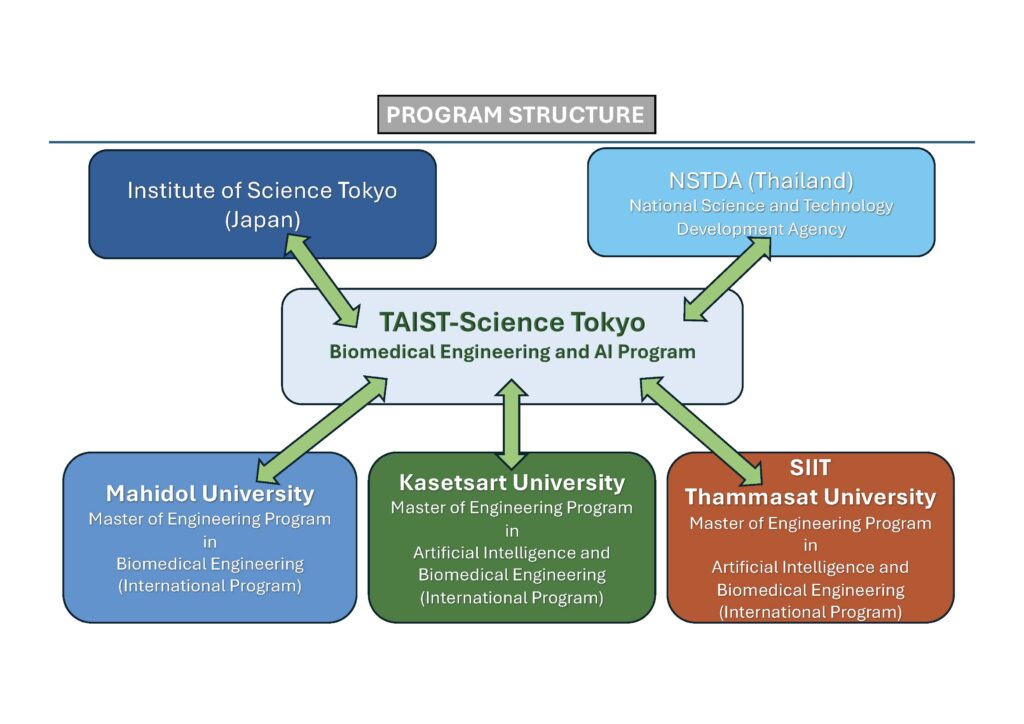
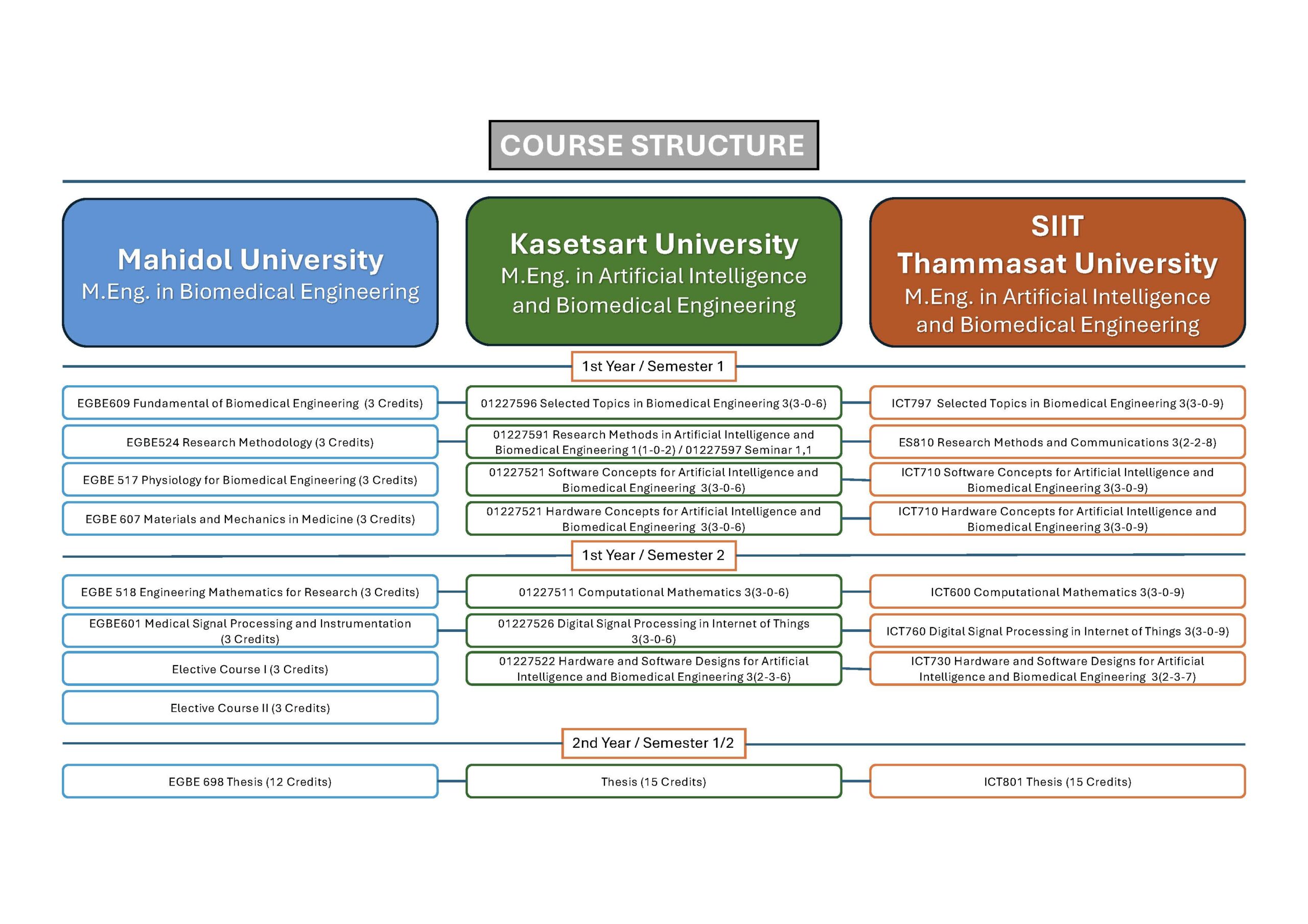
TAIST–Science Tokyo Biomedical Engineering and AI Program is a newly established TAIST program under a collaborative framework among the Institute of Science Tokyo—formed through the merger of the former Tokyo Institute of Technology, Japan’s leading engineering university, and Tokyo Medical and Dental University, Japan’s leading medical and dental university—together with NSTDA (Thailand) and a new partner, Mahidol University, in collaboration with Kasetsart University and the Sirindhorn International Institute of Technology (SIIT), Thammasat University.
This interdisciplinary program represents a new strategic direction in Biomedical Engineering and Artificial Intelligence, integrating advanced engineering, medical sciences, and AI to address next-generation challenges in medical technology, with a strong emphasis on real-world applications in medicine, healthcare, wellness, and related industries, aligned with actual societal and industrial needs.
Introduction to:
1. Mahidol University – Biomedical Engineering Program
2. Kasetsart University – Artificial Intelligence and biomedical Engineering Program
3. SIIT Thammasat University – Artificial Intelligence and biomedical Engineering Program
RESEARCH INFORMATION
Mahidol University
RESEARCH TRACKS
- NEUROENGINEERING
- Brain-computer interface (BCI)
- Bio-Signal processing
- TISSUE ENGINEERING AND DRUG DELIVERY SYSTEMS
- Nanodiagnostics/ Nanotherapeutics/ Nanotheranostics
- Drug Delivery Systems
- Tissue Engineering
- MEDICAL ROBOTICS
- Surgical Robotics, Rehabiliation Robotics and Hospital Service and Logistics Robotics
- Computer-Integrated Surgery
- Soft Robotics, Haptics and AR/VR/MR/XR in Medicine
- ADVANCED COMPUTING IN MEDICINE
- Natural Language Processing in Medicine
- 3D Medical Shape Reconstruction
- Computer Aided Diagnosis
- REHABILITATION ENGINEERING AND ARTIFICIAL ORGANS
- Human-Montion Analysis, Sport Science Technology and Exoskelaton
- Assistive Technology for Elderly and Disable Persons
- Artificial Heart, LVAD and Organ Preservation System
- BIOSENSORS AND INSTRUMENTATIONS
- Electrochemical Biosensors
- Microfluidic devices
- Molecular Diagnostic Devices
- Ultrasound Technology
Biomedical Engineering Research Unit
The Biomedical Engineering unit (BioMed SIIT) integrates fundamentals from engineering, computer science, medical science, and mathematics to solve applied problems in medicine and biology. Our expertise related to BioInformatics and Biomedical Engineering, Optimization, and Numerical Analysis ranges from medical image analysis to producing medical implants and CNC programming.
AI & Biomedical Engineering research group
The integration of AI into industry and biomedical engineering bridges the gap between advanced research and practical public utility. With the variety of the researchers related to the electrical engineering, robotics, and artificial intelligence, this interdisciplinary group advances solutions to complex challenges in the field of biomedical engineering.